Farm cluster facilitators, LNRS officers, Natural England and Catchment Sensitive Farming representatives and people from the private green sector came together for a day of topical debate, knowledge-sharing and an inspirational farm walk.
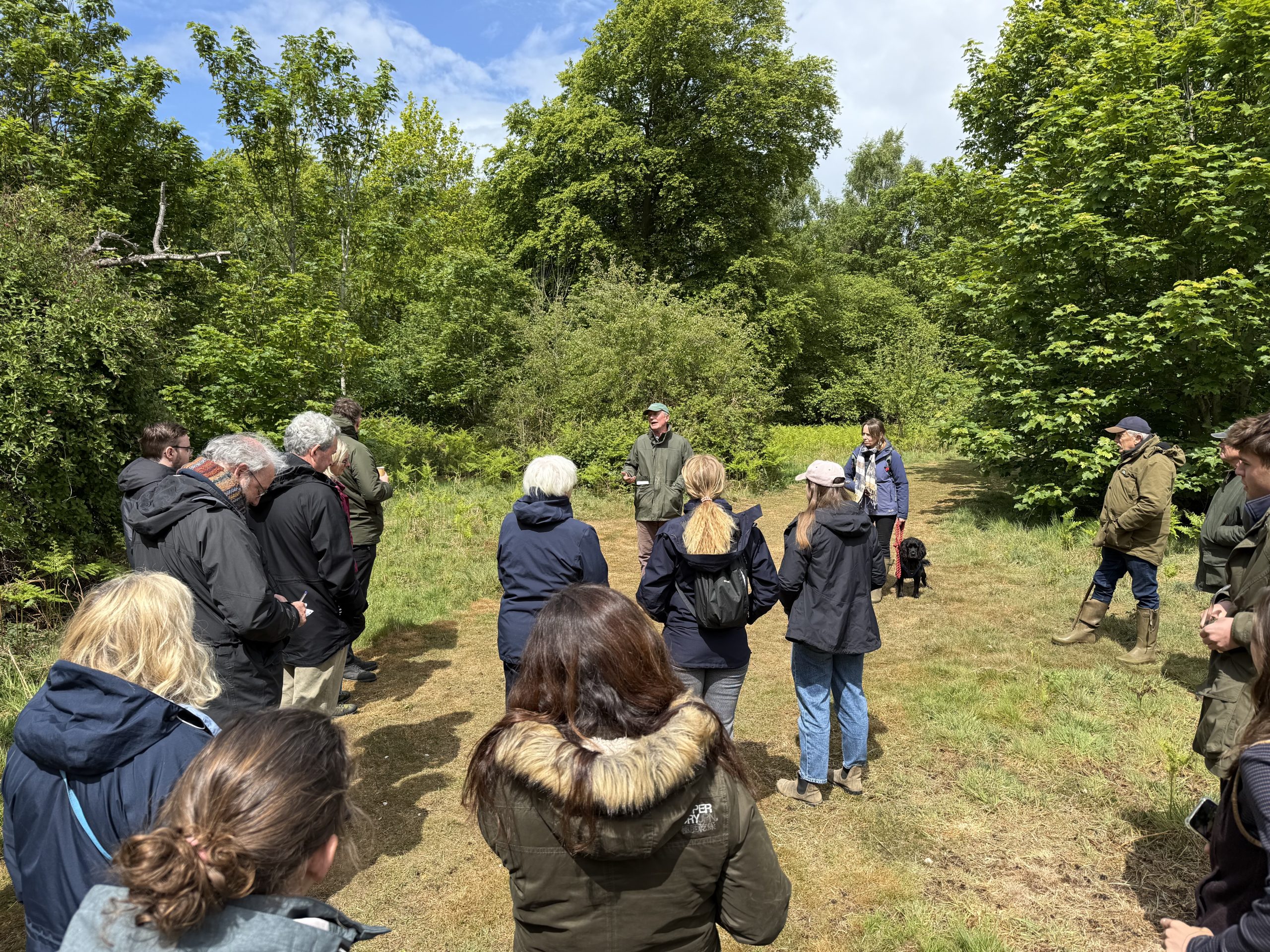
The event was held at AJ Paul’s farm in Broxstead, Suffolk and AJ and Diane Ling (the cluster facilitator) led a brilliant event that highlighted how important cluster collaboration is to drive farming and environmental work forwards in a strategic and positive manner.
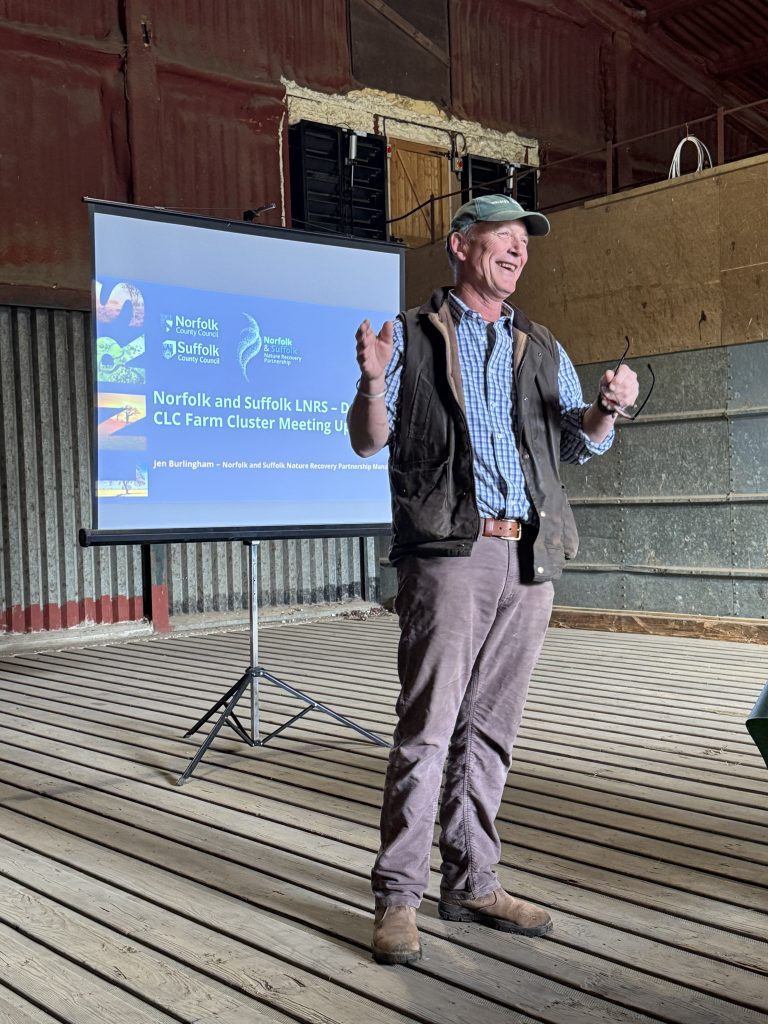
The first presentation came from Jen Burlingham, the Norfolk and Suffolk Nature Recovery Partnership Manager. Jen gave an update on where the LNRS currently sits and gave a call out to all farm clusters to encourage their farmer members to share information on nature recovery work that is being undertaken but not necessarily recognised officially.
The LNRS aims to identify locations across the two counties to create or improve habitat most likely to provide the greatest benefit for nature and the wider environment. By looking at the associated landscape-wide map, farmers and landowners will be able to see not just how they can contribute through specific actions, but also see how the work that is happening on their land may align with other priorities, such as climate adaptation, water quality and flood management.
The longer-term aims are to connect projects with public and private funding sources.
As Jen stressed, the most effective way of demonstrating to farmers/landowners the potential impact they could have is to show landscape scale maps of current and potential habitat creation and the most effective way to highlight the work to outside investors is via maps. A national map aggregating data from across the UK is expected to be completed this year.
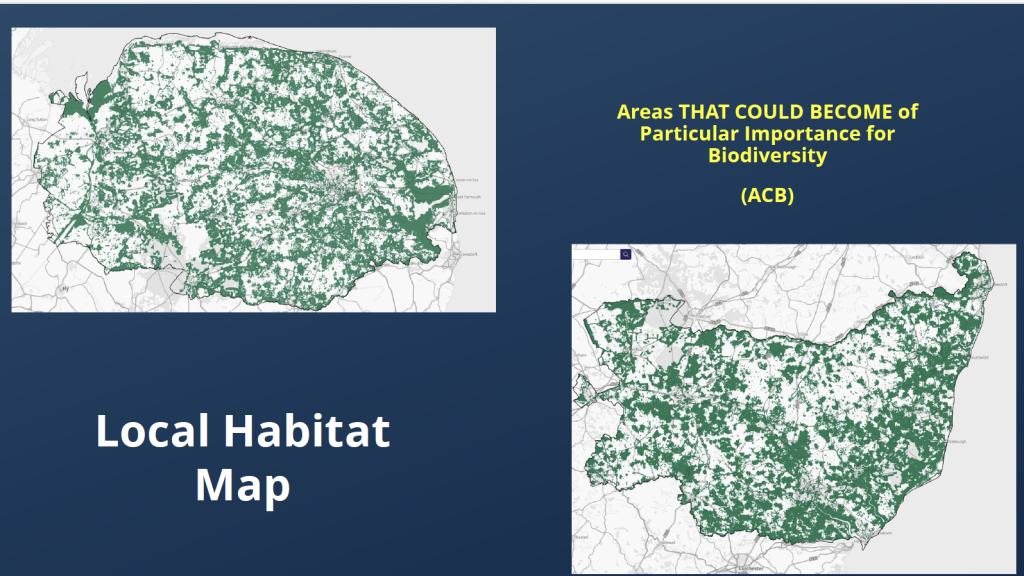
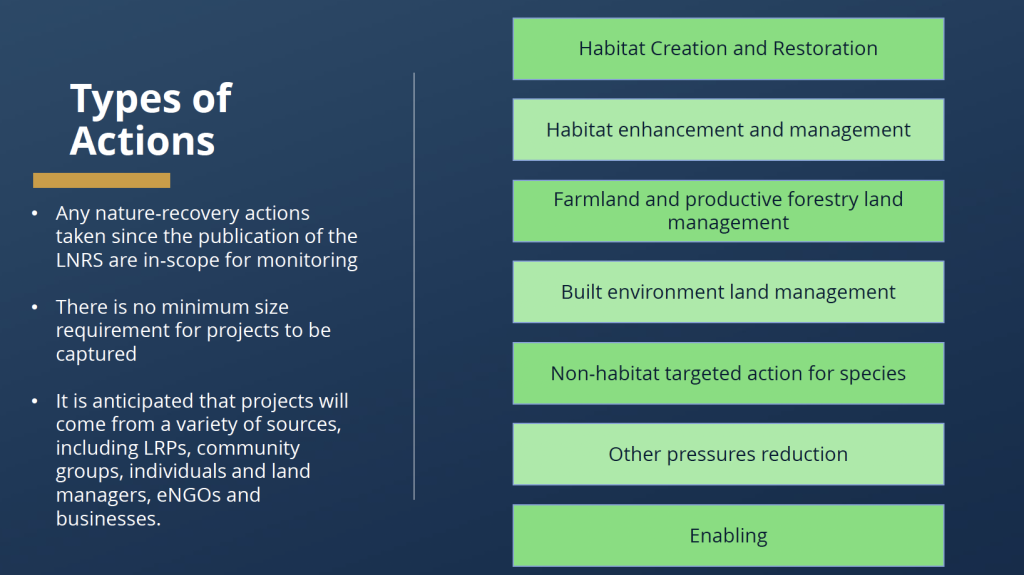
The drive now is for data to be collected to populate the local Norfolk and Suffolk LNRS map. This will be done via web apps and surveys, workshops and engagement activities, offline tools and resources, tapping into existing monitoring activities and drawing on information already available to DEFRA. For this reason, actions that are already within SFI or Countryside Stewardship do not need to be re-recorded. As an active example, a landowner may have their woodlands in a government scheme but has since created a pond that is not. The information about the pond should be sent to the LNRS for inclusion on the map.
The following diagram outlines the actions that could be included:
For further info or any questions on LNRS, contact: naturalnorfolk@norfolk.gov.uk or lnrs@suffolk.gov.uk
The next presentation was an update from David Lyles. This presentation has also been circulated but in summary: CLC has been at the heart of discussions on the future of cluster groups. David explained that he had been involved in the discussions led by Minette Batters and published as the Farm Profitability Review.
The Review recommended the formation of regionally based Agri-growth hubs, which would be farmer-led collaborative networks based around regions or river basins. These would take the shape of Farm Environmental Delivery groups which again would be farmer-led voluntary groups working to implement catchment wide actions. The FEDs would seek to work with other bodies such as LNRS and devolved and local authorities as well as the Ministry of Housing, Community and Local Government (MHCLG).
The Review also recommended that the Task-Force on Nature-related Financial Disclosure (TFND) became mandatory to demand that the business and economic sector off-set its environmental impact.
The creation of the FEDs sits really nicely alongside the work and direction of development that the CLC is following as the following image demonstrates.
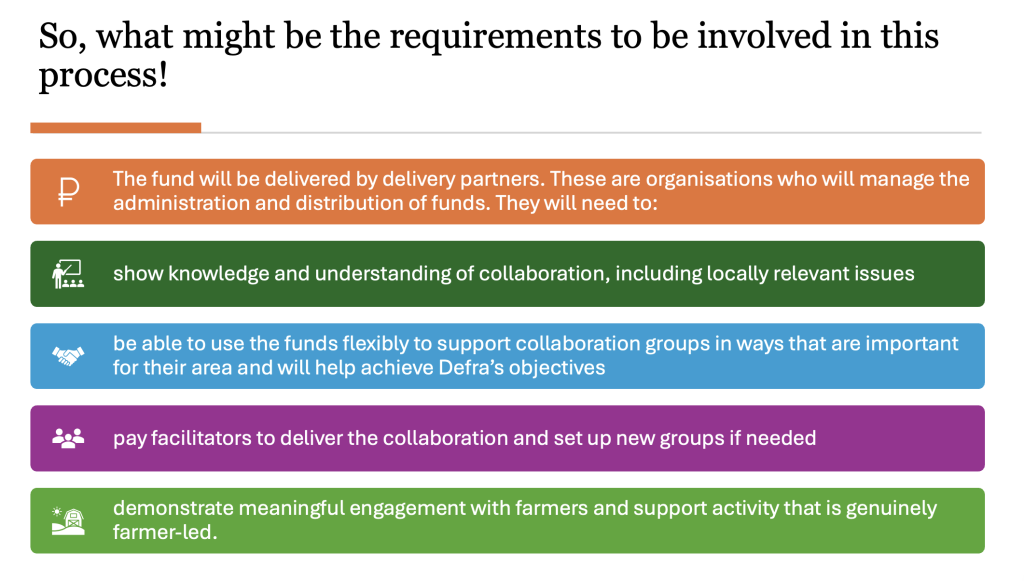
Summing up the process and its implications, David stressed that each cluster should be preparing itself for a funding application. Kat Reay suggested that this is something the individual members of the CLC could come together for. By taking a uniform approach, we would present ourselves as a collective with a clear landscape-wide strategy. A follow-up online meeting is suggested to discuss this further.
Kate Dewally was then introduced as the newest recruit to the CLC team. Kate will be working with clusters to produce a map that highlights species across the CLC area. The idea is for farmers to take pictures of species that are on their land that may align with priority species – or simply be of personal interest. For example: Pictures of Bee-eaters in the Mun may be a sign that the farmer network has been maintaining or creating habitat that attracts the bird.
Equally, a picture of an invasive weed species may warn farmers in the area to be aware of this particular plant – the map will demonstrate the extent and speed of its spread.
Kate will be in contact with clusters to discuss the best way of sharing this information. It is expected to take the form of a simple app. Jane Thompson suggested the SBIS app may be suitable.
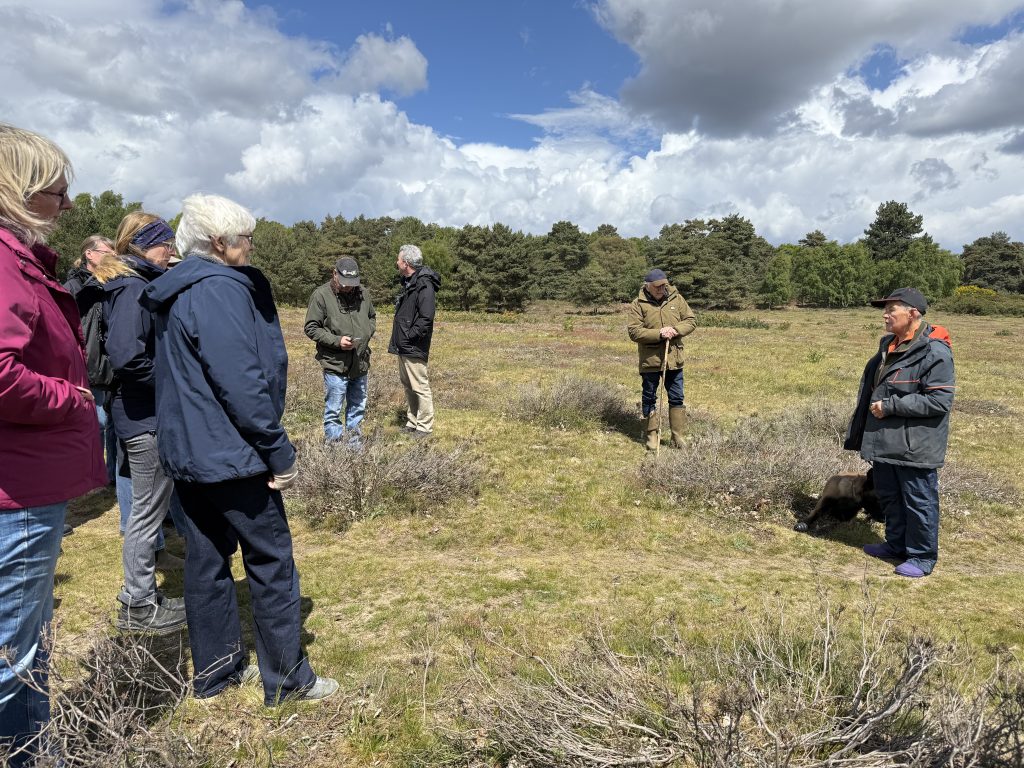
AJ Paul and Diane Ling headed up a farm tour that included an enlightening talk from the Farm Manager on the various crops grown on the farm. Potatoes and onions were the focus of the talk, with an emphasis on how the types of potatoes and onions grown were chosen due to their disease resistance and suitability for the particular soil type. Irrigation is a huge part of the farm’s commercial crop success.
The Livestock Manager introduced the group to some of the farm’s cattle. The Red Poll and Aberdeen Angus cattle roam across the heathland all year. The farm uses no vaccinations and very little additional forage because the cattle can get all they need from the vegetation. They also act as lawnmowers to keep the area in check and prevent it becoming over grown. This creates brilliant habitat for a range of bird, mammal and insects.
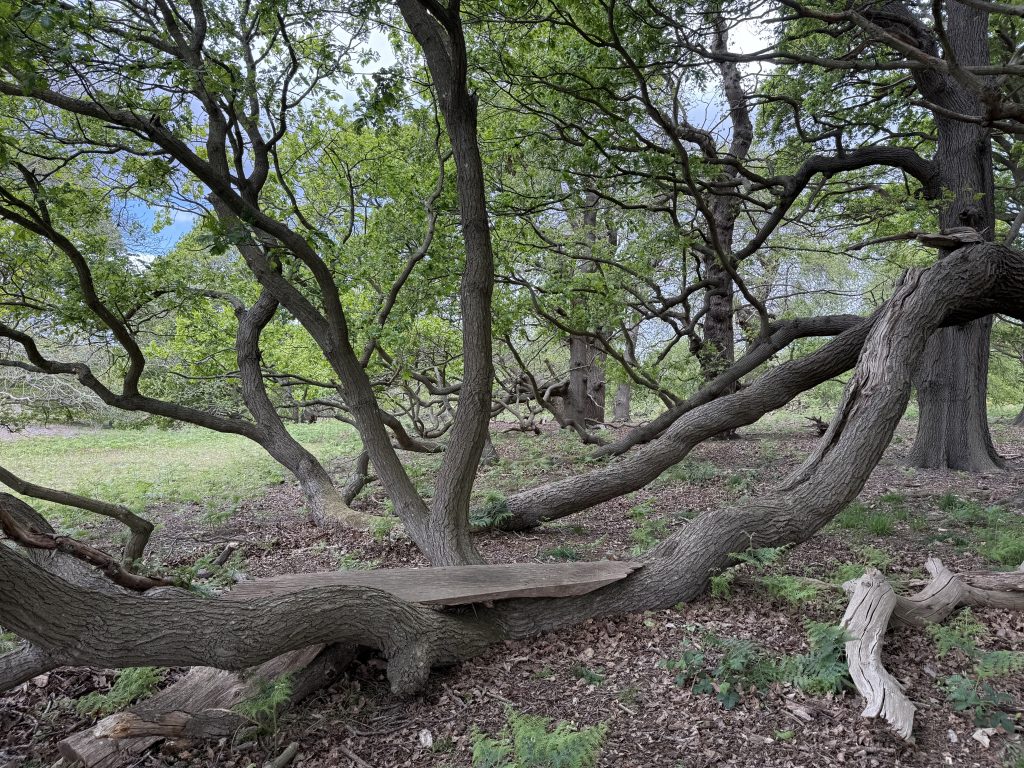
The farm is packed full of different habitat. One of AJ’s favourite spots is a small hill that is home to a number of stately Quercus Patraea oak trees that rise magnificently above the landscape and sweep down to the ground. From this point you can see both the manicured lines of the potato field sitting next to the wild heathland and the areas of tree and hedge belts that provide for nature.
Roger Draycott of the GWCT spoke about the potential for green finance to fund a farm’s long-term environmental actions. This would mean demonstrating how much biodiversity uplift was planned. He spoke of the merits and disadvantages of BNG, carbon credits and natural capital.
Diane spoke about the way the farm staff have been trained to respect nature and its place within the farming system. All the staff are shown how to maintain hedges and edges for maximum biodiversity as well as respecting the land by reducing compaction by careful tractor work.
Jo Hayward and Hannah Barrett from CSF emphasised that the CSF were keen to support any events that cluster groups held to promote actions that would improve the quality of air, soil or water. They can be contacted on: Hannah.Barrett@naturalengland.org.uk; Jo.Hayward@naturalengland.org.uk
The day was topped off with a spectacular lunch, provided by the hosts.
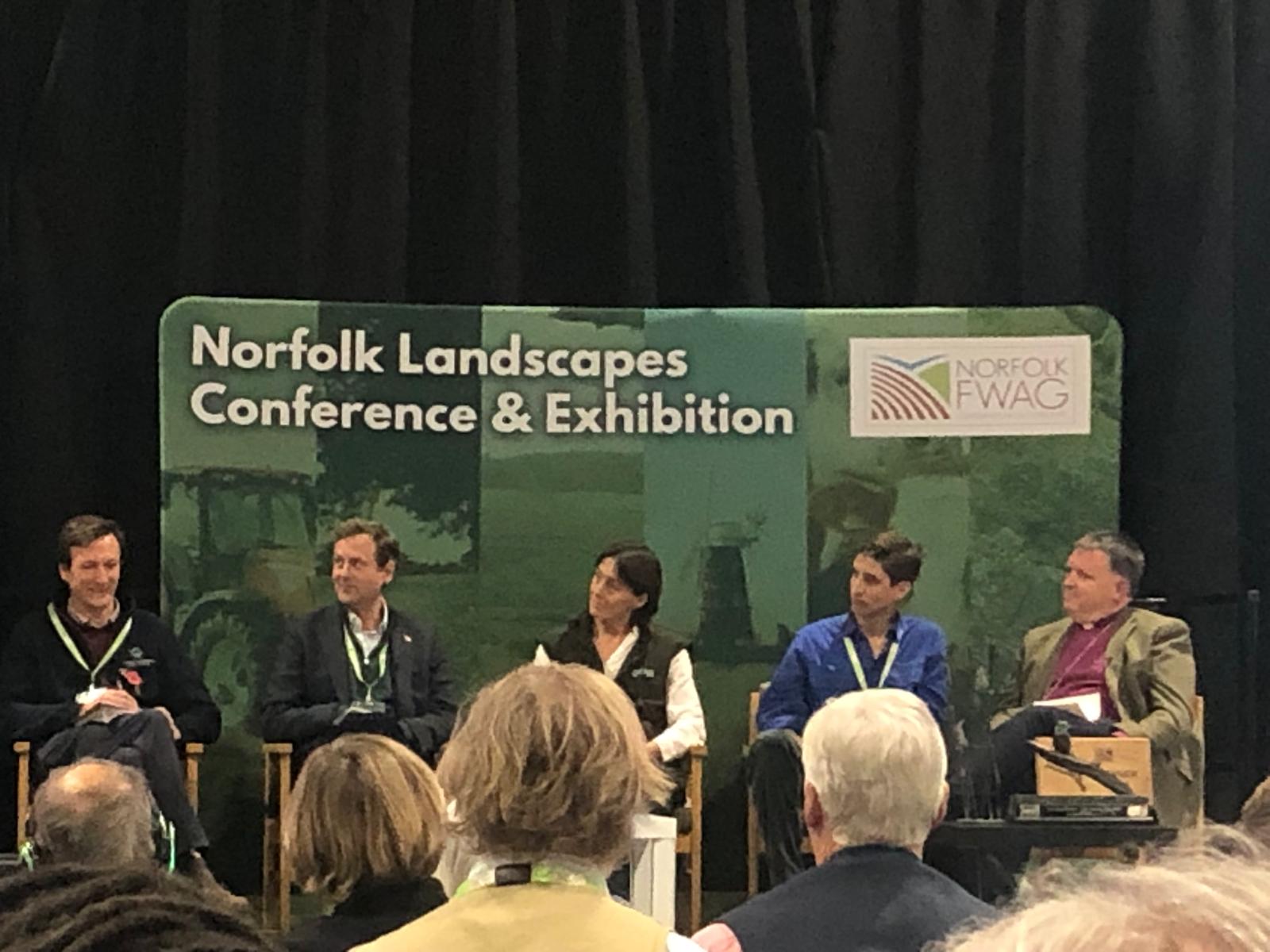
The next face-to-face meeting will be the highly anticipated Norfolk Landscapes Conference on 3 November. As much of that conference is dedicated to cluster group and LNRS activity, it is highly recommended that CLC members and their farmer groups sign up for tickets. The CLC will be holding a meeting at the venue.
Actions:
Read the info on LNRS and share it with your farmer members
Speak with Kate about contributing to the CLC Species Map
Keep updating Sarah with your own cluster news for inclusion on the website
Start thinking about your own cluster funding application if you are considering that route
Book your place at the Norfolk Landscapes Conference.