
Located to the east of Norwich and stretching from just below North Walsham to Great Yarmouth, the Norfolk Broads Farming Cluster (NBFC) is a group of 30 farmers covering 10,000 hectares.
The NBFC operates in a beautiful but fragile environment of many varying landscapes, including wetlands, peatlands, roadbeds, marshes and fen. Agriculture has been entwined with the Broads for hundreds of years and today’s landscape is the result of farming and nature living together.
The earliest influences by man upon the Broads was the Middle Ages when peat from the land was excavated and used for heating and cooking by the monks of St Benet’s in Norwich. Within 200 years, nine million cubic tonnes of peat had been dug from the Broads. Floods in the 14th century filled the pits left by the peat extraction and the waterways that we know today as the Broads were formed.
The modern landscape of the Norfolk and Suffolk Broads covers more than 30,000 hectares of floodplain and is the UK’s largest wetland. Included in the area are 28 Sites of Special Scientific Interest (SSSI) and these provide habitats for numerous rare plants and animals
Drainage has been the most significant action taken by farmers in years gone by. The Windmills that are a frequent feature rising from the landscape are reminders of the huge drainage operations that meant more land could be used to grow crops and graze cattle on the marshes of this unique part of East Anglia.
Modern challenges include adapting to climate change, protecting valuable peat soils from carbon loss, improving water quality, improving sea defences and mitigating against flood and drought events. .
One adaptation taken by today’s farmers is the adoption of Paludiculture, which is essentially wet farming, using the peaty soils to grow crops such as reeds. Increasingly the reeds are being used commercially in a number of exciting developments, but essentially the primary reason for reed growth is to manage water levels, store carbon and improve water quality.
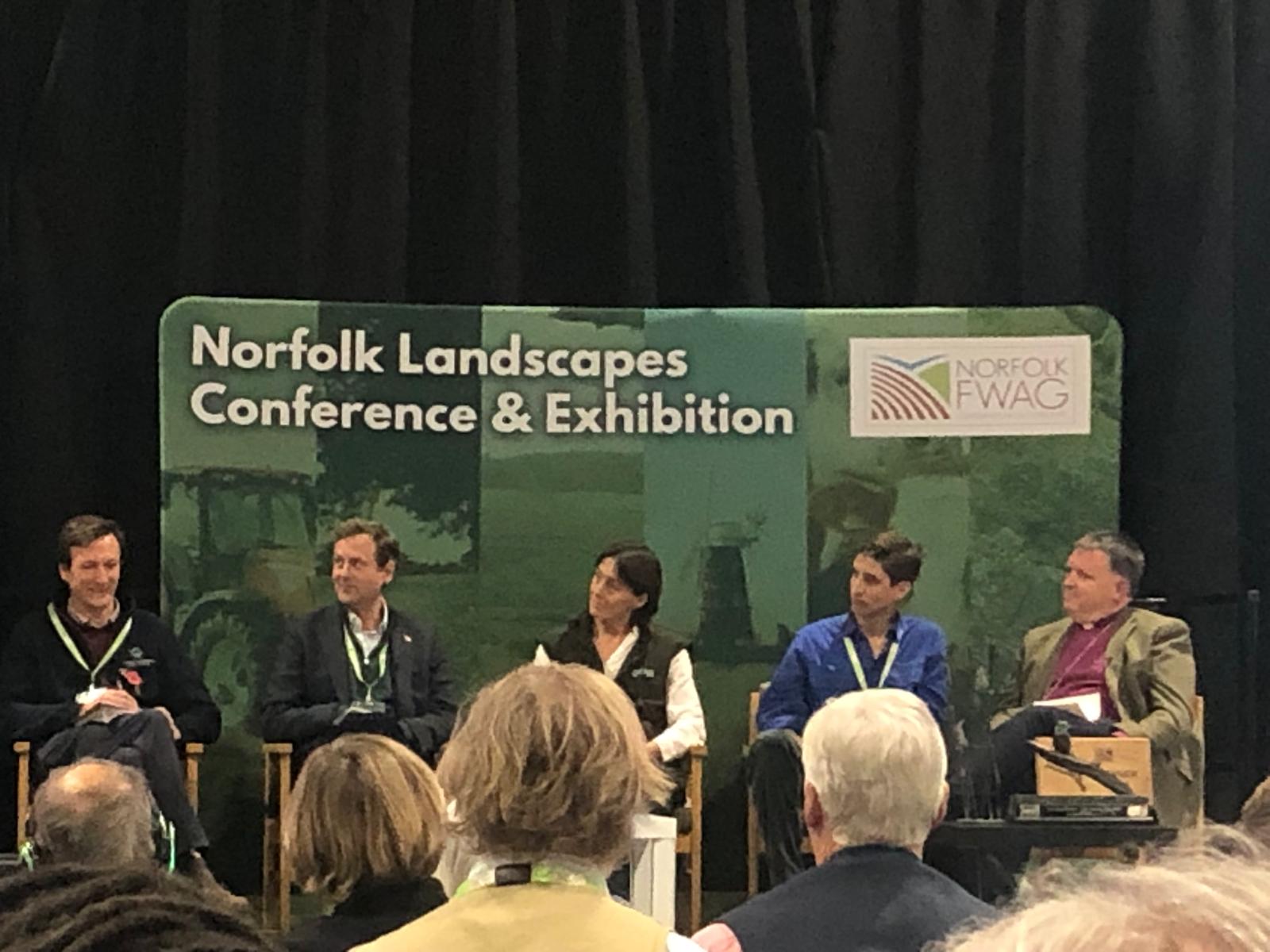
In 2024, with an increasing number of challenges facing the area’s farming community, it was becoming very clear that collaboration between neighbouring farmers was essential. Norfolk Farming and Wildlife Advisory Group (FWAG) has taken on the facilitation role for the NBFC with Farm Advisor Marta Gibbons heading up the group.
Funded through DEFRA’s Facilitation Fund Norfolk, Marta Gibbons now provides support for the farmers across four key areas.
Net Zero
Priority Species
Increasing Biodiversity
Water Management
The Broads is varied and subject to serious changes over the next few decades as a result of sea level rise, hence the cluster has attracted a support from the Broads Authority, Natural England, Anglian Water, Norfolk Wildlife Trust and Forestry Commission; working together collaboratively towards a better future for the region’s communities, habitats and wildlife.
For more information on the Norfolk Broads Farm Cluster, click here.